History is not just a collection of dates and events—it is a series of moments that have shaped the trajectory of human civilization. Some events stand out as turning points, moments when the course of history shifted, setting the stage for profound social, political, technological, and cultural change. Understanding these key turning points helps us see how past decisions, discoveries, and conflicts continue to influence the world today.
The Fall of the Roman Empire (476 CE)
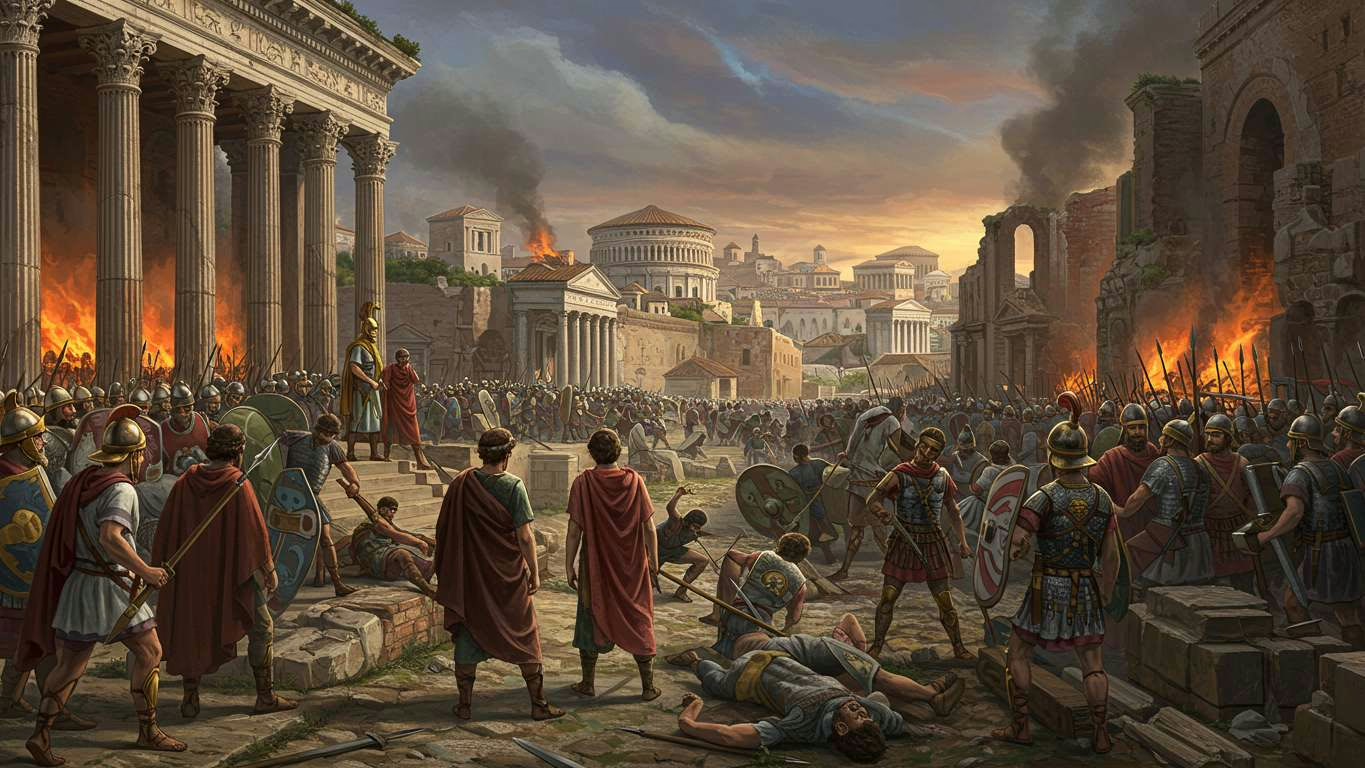
The collapse of the Western Roman Empire marked the end of classical antiquity and the beginning of the Middle Ages in Europe. Rome had dominated much of Europe for centuries, providing a unified political system, advanced infrastructure, and a shared cultural identity. Its fall fragmented Europe into smaller kingdoms, leading to centuries of political instability but also paving the way for the rise of feudalism, the spread of Christianity, and the eventual formation of modern European states. This turning point reshaped governance, trade, and culture, laying the groundwork for the Renaissance centuries later.
The Discovery of the Americas (1492)
Christopher Columbus’s voyage in 1492 ushered in a global era of exploration, conquest, and colonization. The “discovery” of the Americas had a profound impact on Europe, Africa, and the indigenous peoples of the New World. It led to the Columbian Exchange, which dramatically altered diets, economies, and ecosystems worldwide. Crops like potatoes and maize transformed European agriculture, while European diseases devastated indigenous populations. This turning point not only redefined trade routes and wealth distribution but also set the stage for European imperialism and the eventual creation of the modern Western world.
The Protestant Reformation (1517)
When Martin Luther nailed his 95 Theses to the church door in Wittenberg, he sparked the Protestant Reformation—a religious revolution that challenged the authority of the Catholic Church. This movement reshaped religion, politics, and society in Europe. It weakened the Catholic Church’s power, contributed to the rise of Protestant states, and facilitated the spread of literacy and education as people began reading the Bible in their own languages. The Reformation also contributed to the development of modern notions of individual conscience, freedom of thought, and secular governance.
The Industrial Revolution (18th–19th Century)
The Industrial Revolution transformed the world by shifting societies from agrarian economies to industrialized ones. Innovations in machinery, transportation, and energy production revolutionized manufacturing and urban life. Steam engines, textile machines, and railways not only increased productivity but also changed social structures. People moved from rural areas to cities in search of work, creating new urban populations and labor challenges. The Industrial Revolution was a turning point that fueled global trade, technological advancement, and the modern capitalist economy, setting the stage for the contemporary industrialized world.
The French Revolution (1789–1799)
The French Revolution was a political and social upheaval that challenged centuries of monarchical rule. It introduced radical ideas about liberty, equality, and fraternity, influencing not just France but the entire world. The revolution dismantled the feudal system, codified legal rights, and inspired movements for democracy and social justice across Europe and the Americas. It also demonstrated the power of popular movements to reshape society, a principle that would echo in subsequent revolutions and independence movements worldwide.
The World Wars (20th Century)
The two World Wars were among the most significant turning points of the 20th century, reshaping international relations, technology, and society. World War I introduced modern warfare on a massive scale, redrew borders, and led to the collapse of empires such as Austria-Hungary and the Ottoman Empire. World War II was even more transformative, leading to the rise of the United States and the Soviet Union as superpowers, the creation of the United Nations, and the beginning of the Cold War. These conflicts accelerated technological innovation, from nuclear power to aviation, and highlighted the need for international cooperation to prevent global catastrophes.
The Digital Revolution (Late 20th–21st Century)
The rise of computers, the internet, and digital technology represents a modern turning point in human history. This revolution has transformed communication, business, education, and entertainment. Social media, artificial intelligence, and e-commerce have reshaped how people interact, access information, and conduct trade. The Digital Revolution has also blurred borders, creating a globally connected society while raising new challenges in privacy, cybersecurity, and digital ethics. The ongoing impact of this turning point will likely shape human civilization for decades to come.
Conclusion
History is shaped by pivotal events that change the direction of societies and nations. From the fall of empires to technological breakthroughs, each turning point brings new opportunities and challenges. Understanding these moments helps us appreciate the complexity of human progress and the interconnectedness of global events. As we face the future, the lessons from history’s turning points remind us that the decisions and innovations of today will shape the world for generations to come.
The course of history is never predetermined; it is made by the people who live it. By studying these turning points, we gain perspective on how individual actions, ideas, and events can ripple through time, transforming the world in ways that are both profound and lasting.